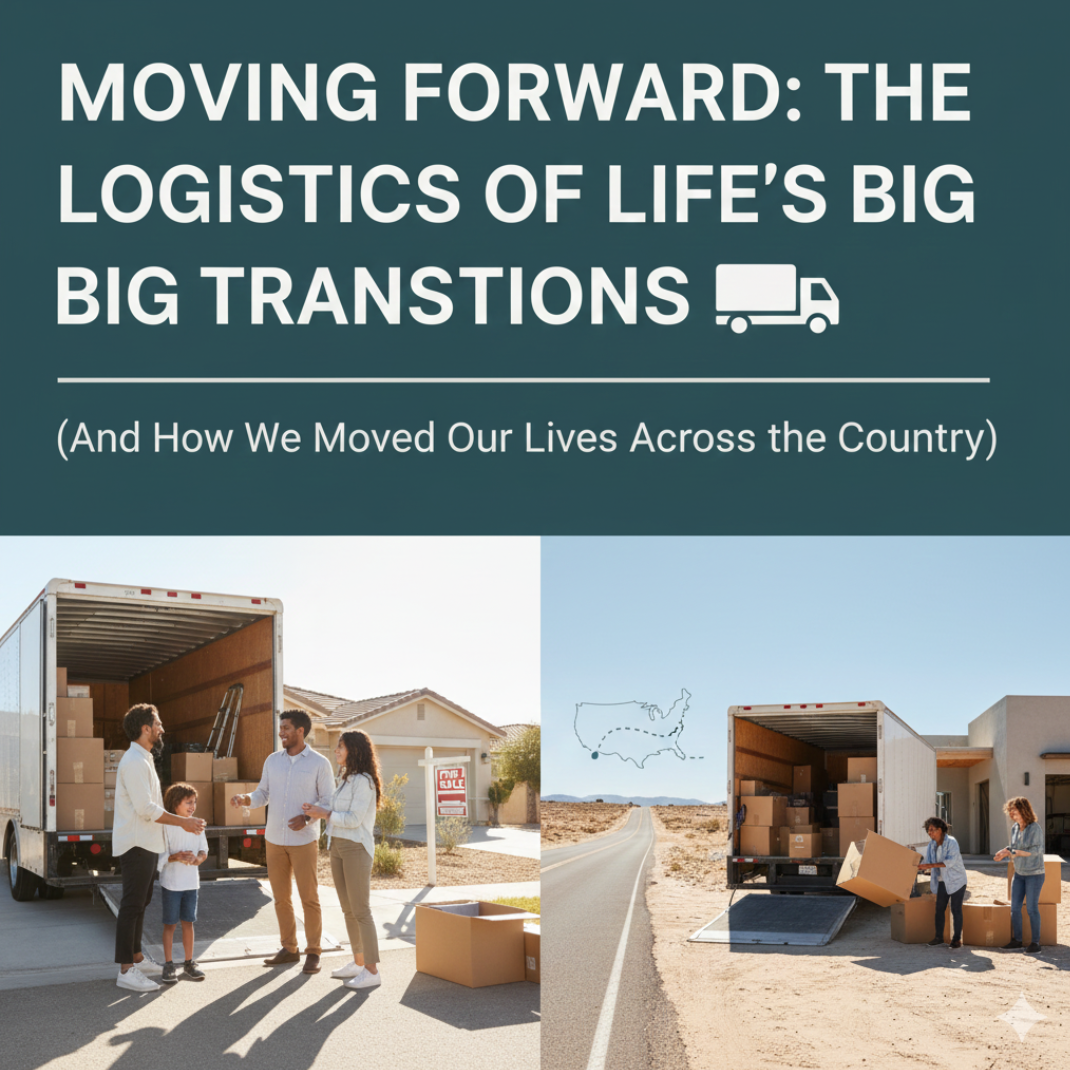

Some life changes arrive gradually, giving you time to adjust, plan, and prepare. Others hit like a lightning bolt, upending everything you thought you knew about your future. Mine was somewhere in between-a slow realization that accelerated into decisive action faster than I expected.
After fifteen years in Boston, I knew it was time to leave. The reasons don’t matter much; they rarely do when you’re explaining major life changes to people who weren’t living inside your particular moment. What matters is that feeling when you know, deeply and certainly, that your life needs to change even when you can’t fully articulate why or how.
The decision to move to Portland brought clarity. The practical logistics? Those brought a thousand small anxieties that threatened to overwhelm the decision itself. How do you uproot a life? How do you move not just your belongings but your entire self across 3,000 miles? And more specifically—what do you do with the car that’s been part of your identity for a decade?
This is the story of how I navigated the practical logistics of a major life transition, and why sometimes the smartest decision is knowing what not to do yourself.
The Weight of Accumulated Life
When you’ve lived somewhere for fifteen years, you don’t just have possessions—you have archaeology. Each item in your apartment tells a story, marks a moment, represents a version of yourself that once was or might have been.
The books you bought at that independent bookstore on Newbury Street. The furniture you splurged on when you finally got promoted. The kitchen equipment you accumulated as you evolved from takeout-dependent twentysomething to someone who actually enjoys cooking. The framed photos, the decorative items, the clothes that fit various versions of your body and life.
And then there’s the car.
My Honda Accord wasn’t just transportation—it was freedom. Weekend drives up to Maine. The move-in days helping friends relocate to new apartments. Road trips to Vermont to see fall foliage. The practical runs to Target and Trader Joe’s. The therapy of night drives when my mind needed to wander while my hands did something familiar.
The car represented independence in a city where many people don’t bother owning vehicles. It was a statement: I choose to have options. I choose mobility beyond the T. I choose the ability to leave the city whenever I want.
Giving it up felt like amputating part of my life. But driving it to Portland? That felt worse somehow—like one last epic journey would be a fitting goodbye to the Boston chapter, but I knew that’s not how endings actually work. The 3,000-mile drive wouldn’t provide narrative closure. It would just be exhausting.
The Cost of Doing Everything Yourself
When you’re going through a major life transition, there’s a temptation to do everything yourself. Partially it’s about control—if I handle every detail personally, nothing can go wrong (narrator voice: things can absolutely still go wrong). Partially it’s about cost—hiring help for everything adds up fast when you’re already spending on deposits, flights, and starting over in a new city.
But there’s also an emotional component that’s harder to articulate. When your entire life is in flux, there’s something grounding about focusing on tangible tasks. Pack this box. Label this container. Schedule this appointment. The small concrete tasks create an illusion of control when the bigger picture feels terrifying.
I initially planned to drive. Three thousand miles from Boston to Portland, Oregon. Google Maps estimated 44 hours of driving time, which realistically meant 5-6 days on the road accounting for rest stops, meals, overnight stays, and the reality that you can’t safely drive 9 hours straight day after day.
The math told a story I didn’t want to hear:
- Gas: approximately $400-500 (depending on current prices and my Accord’s fuel efficiency on the highway)
- Hotels: 4-5 nights at budget motels, figuring $80-100 per night = $320-500
- Food: Breakfast, lunch, dinner for 5-6 days = $150-250
- Wear and tear on the car: 3,000 miles at roughly $0.25 per mile in maintenance/depreciation = $750
- The intangible costs: exhaustion, loneliness, stress, weather risks, breaking down in unfamiliar territory
Total direct costs: $1,620-2,000, plus all those intangible factors that don’t appear on spreadsheets but absolutely affect your wellbeing during an already stressful life change.
And that’s assuming everything goes smoothly. No car trouble. No unexpected weather delays. No mechanical issues that strand me in Kansas or Nebraska with limited options and mounting stress.
The alternative—professional cross country car shipping—quoted around $1,400 to transport my Accord from Boston to Portland. Same destination, zero personal stress, no week of my life consumed by interstate monotony, no arrival in Portland already exhausted from the journey.
For international relocations or complex cross-border moves, partnering with a reliable Spedition service can simplify freight coordination and ensure your belongings arrive safely at your new destination.
Making Peace with Asking for Help
One of the harder lessons of major life transitions is recognizing when to accept help, whether from friends, family, or professional services you hire. There’s no nobility in doing everything yourself, especially when doing it yourself costs more (in time, stress, and sometimes actual money) than getting help.
I’ve always prided myself on self-sufficiency. Moving myself into every apartment I’d lived in since college. Assembling my own furniture. Handling my own car maintenance. This independence felt essential to my identity—I’m someone who figures things out, who doesn’t need help, who solves problems.
But that narrative was exhausting, and it wasn’t even true. Of course I’d gotten help along the way. Friends who helped with moves. Colleagues who advised on career decisions. Family who supported me emotionally through breakups and disappointments. The whole mythology of pure self-sufficiency was just that—mythology.
Hiring a car transport company felt like admitting defeat at first. Like I couldn’t handle the drive. Like I was being soft or taking the easy way out. My mind supplied a dozen judgmental narratives about what it meant that I wasn’t tough enough to drive my own car across the country.
Then I talked with a friend who’d recently moved from New York to Austin. She’d had her car shipped and said something that stuck with me: “Why would I waste a week of my life driving when I could fly there in four hours, get settled into my new apartment, and have my car show up a week later? The drive wouldn’t make me feel more accomplished. It would just make me more tired.”
She was right. The drive wouldn’t prove anything except that I could sit in a car for long periods, which I already knew. It wouldn’t provide meaningful closure on my Boston years. It wouldn’t make the transition easier. It would just be a week of my life spent covering ground I’d never need to cover again.
The Practical Reality of Professional Transport
Once I decided to ship the car rather than drive it, the practical logistics proved remarkably straightforward. This surprised me—I’d built up the decision into such an emotional referendum on my capabilities that I expected the execution to be equally fraught.
Research pointed me toward several reputable companies. Reading reviews on sites like Vehicle Transport Reviews helped identify which carriers actually delivered on their promises versus which had patterns of hidden fees, delays, or poor communication.
The process itself was simple:
- Get quotes from multiple companies (ranged from $1,300-1,800 for my route and vehicle)
- Choose a carrier based on reviews, pricing, and pickup/delivery windows that worked with my schedule
- Prepare the car (clean it, remove personal items, document condition with photos)
- Coordinate pickup in Boston
- Fly to Portland and start settling in
- Receive the car delivery about ten days later
The carrier picked up my Accord from my Boston apartment parking lot on a Tuesday afternoon. I’d cleaned it thoroughly the night before, photographed every angle, and removed everything from the interior. The driver conducted a detailed inspection, we both signed the condition report, and then my car drove away on the carrier truck.
It felt unexpectedly emotional watching it leave. That car had been part of my Boston identity. Now it was heading to a new life, just like I was.
I flew to Portland two days later. By the time I arrived, my car was already somewhere in Ohio or Indiana, making steady progress westward while I focused on getting my new apartment organized, connecting utilities, and beginning to explore my new city.
The Unexpected Benefits of Separation
Having my car arrive a week and a half after I did turned out to be an unexpected gift. Those first ten days in Portland without a car forced me to learn the city differently than I would have if I’d had immediate automotive independence.
I walked my neighborhood extensively. Took buses and MAX trains. Asked neighbors for recommendations on where to shop, eat, and explore. Made my first Portland friend by striking up a conversation while figuring out the transit system. Discovered coffee shops I’d have driven past without noticing.
Not having my car immediately available pushed me to engage with Portland as a pedestrian and transit user first. When my Accord finally arrived, I already knew the city well enough that the car enhanced my experience rather than defining it.
The delivery itself was anticlimactic in the best possible way. The carrier called the day before to confirm delivery time. The truck arrived Wednesday morning, my car rolled off looking exactly as it had when it left Boston, I inspected it thoroughly (not a single new scratch or issue), signed the delivery paperwork, and suddenly I had my car back.
Except it wasn’t just my car anymore. It was my car in a new city, ready to explore new places, create new memories. The same vehicle, but freed from its Boston context and ready to be part of my Portland story.
What the Car Couldn’t Carry
The car transported my vehicle, but not my anxiety. That traveled with me on the plane, settled into my new apartment before I did, and took considerably longer to address than simple logistics.
Moving across the country for a fresh start sounds romantic until you’re actually doing it. Then it’s terrifying. You’re leaving behind your support network, your familiar places, your established routines. You’re arriving somewhere where you know virtually no one, where you have to rebuild social connections from scratch, where everything from grocery stores to where to get your hair cut requires research and decision-making.
The practical logistics—moving your stuff, transporting your car, changing your address—are actually the easy parts. They’re solvable problems with clear solutions. The emotional logistics of rebuilding your life? Those take much longer and don’t come with Google Maps directions.
But here’s what I learned: making the practical logistics as smooth as possible creates space for addressing the emotional ones. By having my car professionally transported rather than adding a stressful cross-country drive to an already overwhelming life transition, I gave myself space to actually process what I was doing and why.
I arrived in Portland rested from a four-hour flight rather than exhausted from a six-day drive. I had energy to explore my new neighborhood, set up my apartment, and start building new routines. I wasn’t dealing with car trouble or recovery from the road trip. I was just… starting fresh, with the cognitive and emotional bandwidth to actually engage with my new life.
The Technical Side: Preparing Your Vehicle for Transport
For anyone considering professional car transport during a move, the preparation process is straightforward but important. These details matter, and getting them right ensures smooth service:
Before the carrier arrives, thoroughly clean your car inside and out. This isn’t about impressing the driver—it’s about being able to accurately document your vehicle’s condition. A clean car makes every existing scratch, ding, or imperfection visible and photographable. This documentation protects you if any damage occurs during transport.
Remove all personal items. Everything. Carriers aren’t responsible for personal items left in vehicles, and loose objects can shift during transport, potentially causing interior damage. Empty the glove compartment, center console, door pockets, and trunk. Don’t leave sunglasses, phone chargers, garage door openers, or anything else you care about.
Document everything photographically. Take clear, dated photos of your entire vehicle from multiple angles. Get close-ups of any existing damage, the odometer reading, your VIN, and the overall condition. These photos are your insurance policy if any disputes arise about transport damage.
Check your fuel level. Most carriers request between a quarter and half tank—enough for the driver to operate your vehicle on and off the trailer, but not so much that it adds unnecessary weight. Document your fuel level in your pre-transport photos.
Disable car alarms and remove toll transponders. An alarm going off during transport creates problems, and toll transponders will trigger charges as the carrier drives through toll roads. If you’re transporting to a different state or region, you’ll need to get new toll devices anyway.
Address any mechanical issues before transport. While carriers will transport vehicles with minor mechanical problems, significant issues (leaking fluids, malfunctioning brakes, steering problems) may cause your vehicle to be rejected at pickup. Better to handle known issues beforehand than face complications at pickup time.
Have documentation ready: registration, proof of insurance, and instructions for the delivery location. If you won’t be present for delivery (you’ll already be at your new location), make sure the carrier has clear delivery address information and contact details.
The Real Cost-Benefit Analysis
Financial spreadsheets only tell part of the story. Yes, professional car transport cost roughly the same as driving myself would have cost once I accounted for all expenses. But the real cost-benefit analysis goes beyond dollars:
Time value: Six days driving versus one four-hour flight. That’s 5.5 days of my life I didn’t spend on interstate highways. Those days went toward getting settled in Portland, exploring my new city, and processing the major life change I was experiencing.
Physical wellbeing: I arrived in Portland rested and ready to engage with my new environment, not exhausted from marathon driving. This made the critical first few days significantly more manageable.
Stress reduction: No anxiety about weather, car trouble, or navigation. No loneliness of solo cross-country driving. No arrival exhaustion. Just a simple flight and the knowledge my car was on its way.
Vehicle wear: My Accord didn’t accumulate 3,000 hard interstate miles. This preserved its value, delayed maintenance needs, and meant I wasn’t starting my Portland life with a vehicle that needed immediate service from the long journey.
Emotional space: The most significant benefit was having mental and emotional energy to focus on the actual transition rather than the logistics of a cross-country drive. Those first days in a new city matter tremendously for how you adapt and adjust. Arriving rested made all the difference.
For anyone considering whether to drive or ship during a major move, I’d suggest this question: What would you rather be doing with that week of your life? If the answer is “literally anything other than driving solo across the country,” professional transport is worth every penny.
Lessons Learned About Transitions
Major life changes teach you things about yourself, some of which you’d rather not learn. They reveal your coping mechanisms, expose your fears, and test your adaptability in ways regular life doesn’t.
Here’s what moving across the country taught me:
Sometimes the brave choice is accepting help. Not every challenge needs to be overcome through sheer determination. Sometimes wisdom means recognizing when paying for a service provides better outcomes than doing everything yourself.
Logistics and emotions are separate problems. Solve the logistics cleanly and efficiently so you have energy for the emotional work. The emotional work is harder, takes longer, and matters more. Don’t deplete yourself on logistics that professionals can handle better.
The transition itself matters more than how you arrive. Whether I drove or flew to Portland made no difference to my long-term adjustment and success in my new city. What mattered was arriving with the cognitive and emotional resources to engage fully with my new life.
Sometimes the physical journey doesn’t need to mirror the emotional one. I was on a metaphorical journey from one version of my life to another. The physical journey from Boston to Portland didn’t need to be some epic drive to give that transition meaning or legitimacy. Flying there in four hours and having my car shipped separately worked perfectly fine and arguably better.
For specialized car shipping needs or if you’re dealing with unique vehicle situations, resources like Auto Diagnostics AE can provide guidance on properly preparing vehicles for transport, especially if your car needs pre-transport inspection or service before the journey.
Six Months Later: Reflections
I’ve been in Portland for six months now. My Accord has explored Pacific Northwest backroads, driven to the Oregon coast countless times, and navigated city streets that feel increasingly familiar. The car that was part of my Boston identity has become part of my Portland story seamlessly.
The move was hard. Rebuilding a social circle, finding new favorite places, adjusting to a different city’s rhythm and culture—all of that took time and emotional energy. Some days I questioned whether I’d made the right decision moving across the country.
But I never once regretted having my car professionally transported instead of driving it myself. That decision removed one significant source of stress from an already stressful process. It gave me resources—time, energy, emotional bandwidth—to focus on what actually mattered: building a new life.
Life transitions are hard enough without making them harder through unnecessary martyrdom or misguided ideas about what constitutes strength or capability. There’s no prize for doing everything yourself, no extra points for making your life more difficult than it needs to be.
Sometimes the strongest thing you can do is recognize when to let professionals handle what they do best, so you can focus on what only you can do: building your new life with intention, energy, and hope.
The car arrived safely. So did I. And that’s what mattered.
For Anyone Facing a Similar Transition
If you’re reading this because you’re planning a major move, considering a cross-country relocation, or standing at the edge of a significant life change, here’s what I wish someone had told me:
The practical logistics will work out. Whether you drive, fly, ship your car, sell it and buy new—these are solvable problems with clear solutions. Don’t let anxiety about logistics prevent you from making the life change you need.
Give yourself permission to make things easier rather than harder. If you can afford to hire help for various aspects of your move, do it. This isn’t weakness—it’s wisdom. You’ll need your energy for adjusting to your new life, not for unnecessary hardship during the transition.
The transition period is temporary. Those overwhelming first weeks in your new city will give way to growing familiarity and comfort. You won’t always feel disoriented and uncertain. The newness wears off, routines establish themselves, and one day you’ll realize you’ve become a person who lives here now.
Trust the decision that brought you to this point. If you’re making a major life change, you presumably have good reasons. When the transition feels hard (and it will), remember why you chose this. The difficulty of adjustment doesn’t mean you made the wrong choice.
The vehicle transport? That’s just one small piece of a much larger puzzle. But making that piece as smooth and stress-free as possible helps with everything else. Let the professional car shipping company handle the logistics so you can focus on the real work: building the next chapter of your life.
Forward is scary. Forward is uncertain. But forward is also where growth happens, where new possibilities emerge, where you discover versions of yourself you didn’t know existed.
My Accord made it across the country safely. So did I. Neither of us knew exactly what waited in Portland, but we both arrived ready to find out.