
The concept of residing in a small, eco-friendly, and entirely renewable-energy-powered house is gaining more and more popularity. The Tesla Tiny House is one of the concepts that perfectly embody this vision. This small but innovative home is designed to showcase the clean energy technologies of Tesla and operate solely on solar energy, which can be towed to other places, thus being both environment-friendly and mobile.
The Tesla Tiny House with built-in solar panels, a Powerwall battery, and intelligent energy management demonstrates how the latest technology can simplify and make off-grid living easy and convenient.
What Is the Tesla Tiny House?
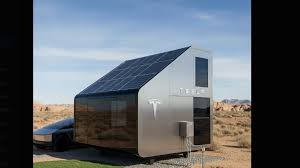
The Tesla Tiny House is a small house mounted on a trailer, which can be moved to another place. This concept of a tiny house was first introduced by Tesla to demonstrate how its solar panels and Powerwall battery can be used to power a home with renewable energy.
This tiny home produces electricity on its own using solar panels mounted on the roof unlike the traditional houses that rely on the electrical grid. The power generated throughout the day is stored in a Powerwall battery, which enables the home to continue running even at night or when there is a cloud cover.
Since it is constructed on a trailer base, the house can be pulled by an electric car like a Tesla Model X, which means that it is not hard to transport the home to any place.
A Minimalist yet Practical Design
The Tesla Tiny House is a small house that is intended to offer a comfortable living space. The building is about 6 meters long, 2.2 meters wide and about 4 meters high, and this is small enough to carry around.
The house also has a weight of approximately 2 tonnes, and this makes it be pulled by vehicles that have enough towing power.
Tesla also paid attention to sustainability in the design. The outside is constructed with locally available, chemical-free timber, which minimizes environmental pollution and promotes environmental-friendly construction.
The interior of the tiny house can have basic living amenities, including: although the concept of the tiny house is minimalistic.
- A compact sleeping area
- Energy-efficient lighting
- A small workspace or lounge
- Smart home controls
- Effective storage facilities.
This design is based on the philosophy of tiny living, which is to maximize functionality and minimize the use of space and energy.
Solar Panels: The First Energy Source
The most important characteristic of the Tesla Tiny House is the solar power system. There are six photovoltaic solar panels in the roof which produce electricity using sunlight. These panels, combined, make a 2-kilowatt solar system that can generate energy to power the home.
Photovoltaic cells convert sunlight into electricity and this is how solar panels operate. This electricity is used in the day to power the appliances, lighting and electronic devices in the home.
In case the panels produce more electricity than the home is consuming, the surplus energy is not wasted. Rather, it is saved in a battery system to be used later.
Powerwall: Energy Storage to be used continuously
A Tesla Tiny House includes energy storage, which is a critical component of any off-grid house, and the Tesla Powerwall is used to store electricity generated by the solar panels.
The Powerwall is a lithium-ion battery that can be recharged and stores solar energy produced during the day and discharged when the sun is not shining. This enables the house to run all the time including during the night or when there is a cloud cover.
For example:
- Solar panels produce electricity during sunny days.
- Powerwall battery is charged by excess electricity.
- During the night, the battery energy is used in the house.
This system forms a stable energy cycle that allows the house to operate without the conventional power grid.
Smart Energy Management
The other modern aspect of the Tesla Tiny House is the smart energy monitoring system. The whole energy system can be tracked and managed with the help of the Tesla mobile app.
Through the app, users can:
- Monitor the amount of solar energy that the panels are generating.
- Check the charge level of the battery.
- Monitor the amount of electricity the house is consuming.
- Change energy consumption controls.
This intelligent technology assists homeowners to have a better insight into their energy usage and efficiency.
Mobility: A Home You Can Tow Anywhere
The mobility of the Tesla Tiny House is one of the most distinctive aspects of the house. The home can be moved to different locations since it is mounted on a trailer base.
Tesla even went as far as towing the small house with an electric SUV on its promotional tour to show how renewable energy and electric vehicles could be used to complement sustainable living.
This mobility renders the tiny house attractive to individuals who desire a mobile lifestyle. The owners might even relocate their home to different locations like:
- Remote nature sites
- Off-grid communities
- Campgrounds
- Temporary living locations
The towing capability also implies that the home can keep up with the good weather patterns to produce solar power.
Suggested Read: decentralized finance
Mobile Sustainable Living of the Future
The Tesla Tiny House is not just a small house, but it is an example of how the renewable energy technology can transform the lifestyle of people. Tesla has developed a concept that demonstrates the possibility of full sustainability of housing by integrating solar power generation, battery storage, and smart home technology.
With renewable energy systems being increasingly cheaper and more efficient, the same homes can be more widespread in the future. Small solar-powered houses would assist in saving on electricity, reducing carbon emissions, and achieving more energy autonomy.
Finally, the Tesla Tiny House is a concept of the future world in which houses are not only eco-friendly but also mobile, efficient, and fully powered by clean energy.