
If you’ve got a small garden, it’s not a problem; it’s a puzzle. And like any good puzzle, the satisfying part is figuring out how all the pieces fit together.
The good news is that size really isn’t everything when it comes to outdoor spaces. A little planning goes a long way, and a few clever choices can make even the most modest patch feel bigger and more polished. Here’s how to do it, step by step.
Fix the Flow
If your garden feels cramped, it’s probably not the size. It’s the layout.
A lot of people start by buying furniture or squeezing in more plants, then wonder why it suddenly feels like everything is fighting for space.
So, before you add anything, decide how you’re going to walk through your garden.
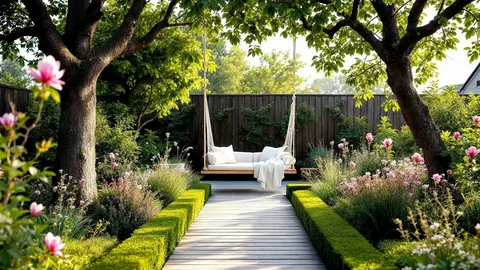
By adding a clear, well-defined path, even if it’s a short one, you can create a sense of journey and make the space feel bigger than it is. Curved paths work especially well because the eye follows the line and doesn’t immediately reach the end.
Also, use light-coloured paving to keep things bright and edge paths with small plants or pebbles to define the space without adding visual clutter. The goal is to make your garden easy to move through, not just nice to look at.
Pick Your Colour Scheme
In small outdoor areas, the walls and fences do more visual work than you realise. Get those wrong, and the space can feel tighter than it actually is.
Dark, heavy shades tend to absorb light and make boundaries feel closer. On the other hand, lighter tones, like pale sage, soft cream, and warm white, reflect light back into the space and create a sense of openness.
Once you’ve chosen a direction, keep it consistent and make sure your walls, furniture, and pots sit within the same palette.
If the colours relate to each other, your garden will feel more intentional. And cohesive spaces always seem larger than the ones competing for attention.
Choose Suitable Furniture
It’s easy to fall in love with big outdoor sofas and sprawling dining sets. But if your garden isn’t sprawling, that dream setup can quickly turn into an obstacle course.
So, before you buy anything, picture yourself actually moving around it. Can you walk past comfortably? Can you pull a chair out without hitting a planter?
Flexibility should be your top priority. Foldable tables let you host when you want to and reclaim the space when you don’t.
Similarly, a bench you can place along a wall is better than individual chairs. Plus, if it has hidden storage underneath, you can use it to tuck away your cushions, tools, and spare pots.
Just keep in mind that the material itself matters, too. The weather in the UK doesn’t treat flimsy furniture kindly. Powder-coated metal and good-quality hardwood tend to hold up well without peeling, rusting, or turning grey and tired by the end of summer.
Use Vertical Space
Most of us design our gardens at eye level and below, then forget there’s an entire wall doing absolutely nothing. Walls and fences aren’t just there to mark the boundary. They’re usable space.
Incorporate a few wall-mounted planters, fix up a trellis, or run climbers upward, and you’ve instantly added greenery without sacrificing a single square metre.
Vertical greenery also draws the eye upward, which makes your garden feel more expansive. It’s the same trick interior designers use with floor-to-ceiling shelving. It just involves more flowers and bees.
If you want something low effort, ivy or clematis will cover a surface quickly. If you’d prefer edible options, train a fig or apple tree flat against a sunny wall using a trellis or support wires.
Herbs are another easy win. Mint, rosemary, and basil don’t need deep soil, so vertical planters suit them perfectly.
And having fresh herbs within arm’s reach to help you whip up delicious meals? That’s the kind of small upgrade you actually notice every day.
Add a Mirror
This one tends to raise eyebrows, but hear us out.
A well-placed mirror on a garden wall reflects light, greenery, and sky, making the space feel like it extends beyond its actual boundaries.
It’s a classic trick used in small Parisian courtyard gardens, and it translates perfectly to UK backyards.
Position your mirrors where they can catch natural light without creating blinding glare and tilt them slightly if needed.
For the best results, opt for weather-resistant frames or go frameless if you want a cleaner look that blends into the background.
One mirror, placed well, can make your garden feel genuinely twice the size. It’s the closest thing to a cheat code that outdoor designing allows.
Keep Decor Minimal and Intentional
When you’ve got a small garden, every extra ornament is front and centre, because there’s no corner big enough to hide clutter.
That doesn’t mean your space should be completely devoid of personality. Instead, choose a handful of pieces that genuinely add value to your garden.
For instance, a single sculptural pot, a simple water feature, or a custom piece of art can anchor the space beautifully.
Think of it like this: your garden is a stage, and you want a lead actor, not an audition queue.
Not sure which materials to pick? Well, natural ones are always a safe bet. Stone, weathered wood, and aged metal all add texture and character without overwhelming the eye.
Plant the Right Specimens
It’s tempting to bring home every specimen that catches your eye at the garden centre. But when you pack too much in, your space loses shape.
A handful of well-chosen plants, with different heights, strong foliage, and long flowering periods, will always look more polished than a crowded, mismatched collection.
And think ahead to the seasons. Choose varieties that peak at different times so there’s always a pop of colour.
If you’re not sure how to do this on your own, designers and landscapers who specialise in small garden designs can suggest solutions you might not have considered.
They know which plants work well together, how to handle difficult corners, and how to make a 4×6 metre garden function like a much larger space.
Conclusion
Small gardens aren’t a consolation prize. With some clever space-saving tricks, you can have a garden that feels uniquely yours and looks polished enough to make the neighbours wonder if you’ve secretly hired a designer.
Now close this tab, go outside, and get started. That patch of potential isn’t going to transform itself.