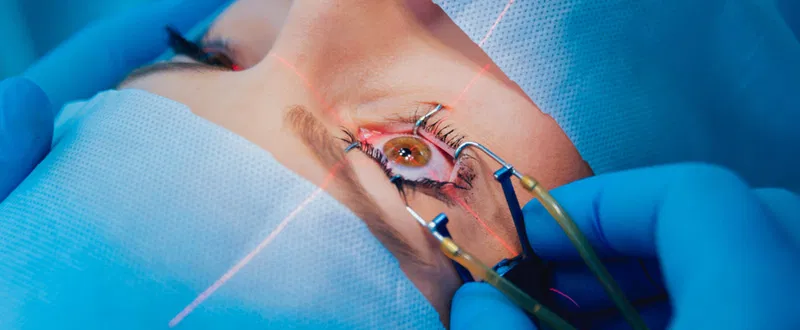

Laser eye surgery has become synonymous with freedom from glasses and contact lenses, but suitability is far more nuanced than advertising often suggests. Being a good candidate is not just about having a prescription; it is about how stable that prescription is, how healthy your eyes are, and what you realistically expect from treatment. Understanding these factors helps you decide whether laser eye surgery is a safe, effective option or whether an alternative approach would serve you better.
Suitability starts with a stable prescription
The starting point for any suitability assessment is prescription stability. Laser eye surgery reshapes the cornea to match your current refraction, so if your prescription is still changing, the benefit may be short‑lived. Most surgeons look for at least one to two years of stability, with no significant change in glasses or contact lens strength.
Younger adults are more likely to experience ongoing changes, particularly if they are still in education, working long hours on screens, or have a history of prescription shifts. In such cases, waiting until vision has settled may reduce the risk of regression and the need for further procedures.[Attachment]
Corneal health and thickness are critical
Beyond the prescription itself, the cornea must be structurally suitable. Laser procedures remove a small amount of corneal tissue to reshape the eye, which requires adequate thickness and regular, healthy curvature. People with thin corneas, irregular astigmatism, or early signs of corneal instability may be better suited to alternatives such as implantable collamer lenses (ICL) rather than laser reshaping.[Attachment]
Detailed imaging – including corneal topography and pachymetry – is therefore central to the assessment. These scans help identify those who can safely undergo LASIK, SMILE, or PRK and those for whom laser treatment might carry an increased risk of long‑term weakening or distortion.[Attachment]
Eye surface and dry eye considerations
The condition of the ocular surface also influences suitability. Existing dry eye symptoms can be temporarily worsened by laser eye surgery, particularly with flap‑based techniques such as LASIK. If you already struggle with grittiness, fluctuating vision, or discomfort at the end of the day, these issues must be identified and optimised before considering surgery.
In some cases, severe or poorly controlled dry eye may make laser eye surgery less advisable, shifting the discussion toward non‑surgical strategies or lens‑based options. Taking the time to stabilise the tear film often leads to more reliable visual outcomes and a more comfortable recovery.[Attachment]
Prescription range and type
Laser eye surgery is most effective within defined prescription ranges. Moderate myopia, low to moderate astigmatism, and certain degrees of hyperopia can be treated predictably, but very high prescriptions may fall outside safe laser parameters. Treating extreme refractive errors with laser alone can require removing too much corneal tissue or may not deliver the clarity and quality of vision patients hope for.[Attachment]
This is where the conversation often turns to alternatives such as ICLs or lens replacement surgery. For some, these options offer better risk–benefit balance and more stable long‑term results than pushing laser technology to its limits.
Lifestyle demands and visual priorities
Suitability is not just anatomical; it is also functional. People with high‑demand visual occupations – such as pilots, surgeons, or professional drivers – may have very low tolerance for even minor optical side‑effects. While most patients adapt well to changes in contrast or subtle halos in low light, these phenomena can be more problematic when split‑second visual decisions are required.[Attachment]
A thorough consultation explores how you use your vision at work and in your personal life, including night‑time driving, screen use, sports, and hobbies. The aim is to match the procedure, or to recommend no procedure, in a way that respects those demands rather than treating everyone the same.[Attachment]
Age, presbyopia, and future needs
Age is another important consideration, particularly in the context of presbyopia – the age‑related loss of near focusing. A patient in their twenties or early thirties typically has flexible natural lenses that allow good near and distance vision once the cornea is reshaped. However, someone in their forties or fifties may already notice difficulty with reading, even before surgery.[Attachment]
In these cases, a simple distance‑only laser correction may not meet expectations, as reading glasses are still likely to be needed. Blended vision strategies or lens‑based surgery may be discussed as alternatives, depending on eye health and long‑term visual goals.[Attachment]
Expectations: clarity, perfection, and risk
Expectation management is central to determining who is truly suitable. Laser eye surgery can dramatically reduce dependence on glasses and contacts, but it does not guarantee “perfect” vision in every situation. Some patients may still use low‑powered glasses for specific tasks, such as prolonged night driving or very fine detail work.
Those seeking absolute perfection, with zero tolerance for any side‑effects or limitations, may be at higher risk of dissatisfaction – even when the procedure is technically successful. A good assessment therefore explores not just what is possible medically, but also how you define success and what compromises you are prepared to accept.
Who may not be suitable for laser eye surgery?
There are clear situations where laser eye surgery is often not the best option. These include:[Attachment]
• Unstable or rapidly changing prescriptions.[Attachment]
• Very thin or irregular corneas suggestive of structural vulnerability.[Attachment]
• Significant, uncontrolled dry eye disease.[Attachment]
• Certain corneal or retinal conditions that limit visual potential.[Attachment]
• Unrealistic expectations or extreme sensitivity to potential side‑effects.[Attachment]
In these cases, the most responsible recommendation may be to defer surgery, explore different procedures, or maintain glasses and contact lenses.
A suitability decision, not a sales processUltimately, deciding who is suitable for laser eye surgery is a clinical judgement that blends measurements, imaging, lifestyle, and expectations. A careful, unhurried assessment allows potential candidates to understand not only the benefits but also the limitations and alternatives. When the decision is grounded in this kind of clarity, those who proceed tend to enjoy more predictable outcomes – and those who do not can be confident that their choice is equally well‑considered.