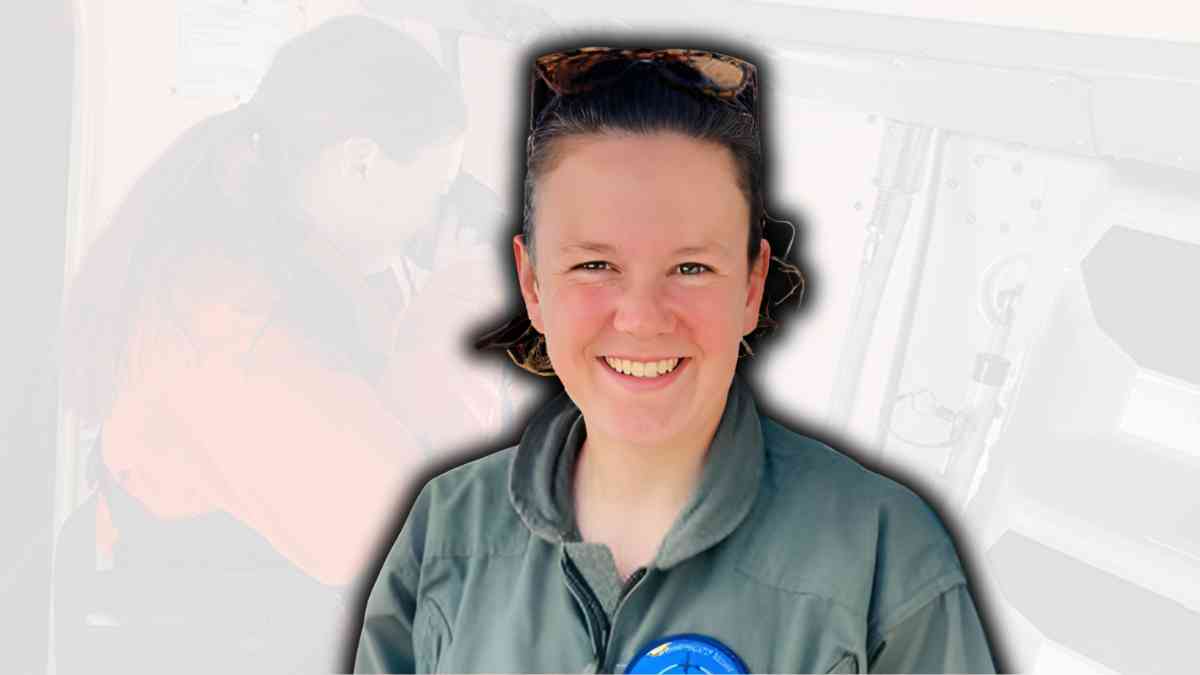

When it comes to studying and protecting some of the ocean’s most endangered creatures, the work is rarely glamorous. Yet, behind every significant sighting of a rare whale or crucial data point in marine conservation, there are dedicated scientists and observers whose efforts are quietly revolutionary. One such individual is Alison Ogilvie, a marine mammal observer whose work with NOAA Fisheries has made a tangible impact on whale research and conservation in the Northeast United States.
Who is Alison Ogilvie?
Alison Ogilvie is a Marine Mammal Observer at NOAA Fisheries’ Northeast Fisheries Science Center (NEFSC). Her role involves scanning vast stretches of ocean from aircraft to locate, identify, and document marine mammals, particularly the endangered North Atlantic right whale. While she may not be a household name, her work is pivotal in ensuring that marine species, some on the brink of extinction, are monitored, studied, and protected.
Alison’s professional journey reflects a combination of academic excellence and hands-on experience. She holds a Bachelor’s degree in Biology from the University of Victoria in British Columbia, Canada, a foundation that has equipped her with the scientific knowledge necessary for her specialized work. Beyond academics, Alison has gained extensive experience in field research, including boat-based whale surveys and participation in marine mammal research programs.
Alison Ogilvie’s Role at NOAA Fisheries
NOAA Fisheries relies heavily on the expertise of marine mammal observers like Alison to monitor whale populations, track migration patterns, and collect data that informs conservation policy. Her primary responsibilities include:
- Aerial Surveys: Flying over the Atlantic Ocean in NOAA’s Twin Otter planes, Alison scans for whales, documenting sightings with precision. This work is critical for species like the North Atlantic right whale, whose population is alarmingly small and declining.
- Boat-Based Observations: Alison participates in surveys conducted from vessels, photographing whales for identification, noting behavior patterns, and gathering data on environmental conditions.
- Data Management and Analysis: Beyond observation, she ensures that collected data are accurately recorded, submitted, and analyzed, contributing to broader conservation strategies.
Her work allows NOAA and other marine conservation organizations to implement measures that reduce human impact on whales, such as enforcing vessel speed restrictions in key habitats and protecting critical feeding and calving areas.
Early Career and Academic Background
Before joining NOAA, Alison Ogilvie built her expertise through a series of practical and academic experiences. Her biology degree provided a strong foundation in ecological principles and marine biology, while internships and early research assistant roles offered hands-on exposure to marine mammal research.
Alison’s early work included:
- Assisting in humpback whale research programs, focusing on behavior and population monitoring.
- Participating in right whale aerial surveys with research centers such as the Center for Coastal Studies, gaining experience in observational techniques and species identification.
- Developing skills in photo-identification and survey coordination, essential tools for modern marine mammal monitoring.
These formative experiences not only honed her scientific and observational skills but also instilled a deep passion for protecting vulnerable marine species.
Notable Work and Recent Contributions
Alison Ogilvie has been involved in some remarkable research and observation efforts. In 2025, she was part of a survey team that spotted a female North Atlantic right whale named “Accordion” and her first calf off the coast of New York. Such sightings are rare, as mother-calf pairs typically remain further south in their calving grounds off Georgia and Florida.
Her observations contribute to:
- Monitoring endangered whale populations: Tracking population health, migration patterns, and social behaviors.
- Conservation policy: Data collected by Alison and her team informs regulations to reduce human-induced harm, including ship strikes and fishing gear entanglement.
- Scientific publications and reports: While many of her contributions are collaborative, her observations provide critical evidence for marine science research.
Alison’s meticulous attention to detail ensures that data are not only accurate but also actionable, aiding in the creation of policies designed to protect these majestic creatures.
Challenges in the Field
Working as a marine mammal observer is not without its challenges. Alison Ogilvie faces environmental and logistical obstacles, including:
- Weather dependency: Surveys rely heavily on favorable conditions. Rough seas, low visibility, or storms can delay or complicate data collection.
- High-risk environments: Flying low over the ocean or conducting boat-based surveys exposes observers to natural hazards.
- Endangered species pressures: Observing critically endangered species adds emotional weight, as every sighting may carry the hope of understanding how to prevent extinction.
Despite these challenges, Alison’s dedication has remained steadfast, reflecting her commitment to both science and conservation.
The Importance of Her Work
The work of Alison Ogilvie and her colleagues is vital for multiple reasons:
- Protecting endangered species: By tracking population trends, researchers can identify threats and implement protective measures.
- Informing public policy: Accurate data supports regulations to protect marine life, including restrictions on shipping and fishing in critical habitats.
- Advancing scientific knowledge: Observations feed into research papers, public awareness, and educational programs.
- Contributing to global conservation efforts: Local monitoring efforts like those led by Alison have implications for global marine biodiversity preservation.
Through her work, Alison demonstrates that detailed observation, scientific rigor, and passion can have a meaningful impact on conservation efforts.
Alison Ogilvie: More Than an Observer
While Alison’s professional life is well-documented, her dedication extends beyond mere observation. She is part of a community of scientists who value collaboration, mentorship, and public outreach. Educating the public about the plight of endangered whales, promoting responsible marine practices, and contributing to environmental awareness campaigns are all integral parts of her mission.
Her role exemplifies how individual dedication contributes to broader ecological and societal benefits, illustrating that one person’s work can ripple across oceans and communities.
From Australian Creative to Global Inspiration
Alison Ogilvie’s journey from a passionate young creative in Australia to becoming one of the most influential interior stylists and content creators of her generation has inspired countless aspiring designers worldwide. Much like how global icons rise through dedication and vision, Ogilvie has carved her own distinctive path in the world of home aesthetics and lifestyle branding. To explore another remarkable story of talent, perseverance, and international recognition, read about Zhang Ziyi – from Beijing prodigy to global cinema icon.
Why Alison Ogilvie Matters
Alison Ogilvie is not just a marine mammal observer; she represents the bridge between data and action. Her work ensures that the often unseen struggles of whales and other marine species are acknowledged, studied, and addressed. She embodies the commitment, patience, and scientific expertise required to make a tangible difference in marine conservation.
Conclusion
Alison Ogilvie’s story is one of dedication, science, and impact. From her academic beginnings in Canada to her current work at NOAA Fisheries, she has carved a path that combines passion and profession. Her contributions to whale research and conservation are invaluable, helping safeguard some of the ocean’s most vulnerable species. Through her work, Alison demonstrates that effective conservation built on careful observation, collaboration, relentless commitment.
For readers who are inspired by her story, Alison Ogilvie is a reminder of the power of dedicated scientific work and the crucial role individuals play in preserving our planet’s natural heritage.
For more fascinating profiles and in-depth articles on influential figures making a difference in science and the environment, visit Megacine.